
Pumpkin Seed Tincture vs Pumpkin Seed Oil: What Are You Actually Buying?

Pumpkin Seed Tincture vs Pumpkin Seed Oil is a useful label question because these products can sound similar while being very different formats. One may be a liquid extract made from dried pumpkin seed. Another may be an oil pressed from pumpkin seeds. Another may be a softgel, capsule, glycerite, oil drop, or blended supplement. If you only search “pumpkin seed drops,” it is easy to buy the wrong type.
Pumpkin seed usually refers to seeds from Cucurbita pepo or related pumpkin species. The seed can be used in foods, oils, powders, capsules, and liquid extracts. HerbEra’s alcohol-free pumpkin seed extract context shows why shoppers need to read the base and format carefully: an alcohol-free liquid extract from dried seed is not the same thing as pumpkin seed oil.
This guide explains the difference between pumpkin seed tincture, pumpkin seed oil, seed extract, glycerite, oil drops, capsules, and softgels so you can match the product to the format you actually want.
Are Pumpkin Seed Tincture and Pumpkin Seed Oil the Same Thing?
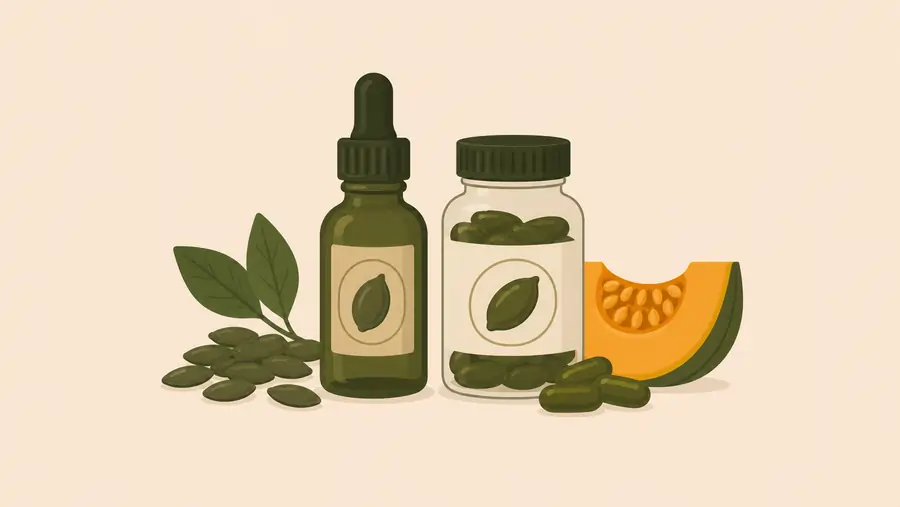
No. Pumpkin seed tincture and pumpkin seed oil are not the same thing. A tincture or liquid extract is made by extracting compounds from pumpkin seed into a liquid base such as alcohol, glycerin, water, or a blend. Pumpkin seed oil is the fatty oil pressed from the seed.
The difference matters because the base, texture, taste, serving directions, label wording, and product use are different. A tincture is usually measured in drops, droppers, or milliliters. Pumpkin seed oil may be measured in teaspoons, milliliters, softgels, capsules, or oil drops.
The practical answer
If the label says liquid extract, glycerite, alcohol-free extract, or tincture, you are probably looking at an extract format. If the label says pumpkin seed oil, cold-pressed oil, oil drops, or softgels with oil, you are looking at an oil format.
Do not assume “drops” means tincture. Oil drops are still oil. Do not assume “extract” means oil. Extracts and oils are different product categories.
What Is Pumpkin Seed Tincture?
Pumpkin seed tincture is a liquid extract made from pumpkin seed, often listed as Cucurbita pepo seed or dried seed. The term tincture traditionally suggests an alcohol extract, but online supplement labels sometimes use tincture more broadly for liquid extracts.
An alcohol-free pumpkin seed tincture may be closer to a glycerite or liquid extract made with vegetable glycerin and water. That format is different from a pressed oil.
What to check on the label
Look for Cucurbita pepo, pumpkin seed, dried seed, liquid extract, alcohol-free, glycerin, vegetable glycerin, purified water, drops, dropper, serving size, and suggested use.
If the label says alcohol-free but also says tincture, check the carrier ingredients. They should explain what replaces alcohol in the liquid base.
What Is Pumpkin Seed Oil?
Pumpkin seed oil is the oil pressed from pumpkin seeds. It is a fat-based product, often dark green, golden, or brown-green depending on seed type, processing, and roasting. It may be sold as bottled oil, oil drops, softgels, or oil capsules.
Pumpkin seed oil is often discussed in relation to fatty acids, sterols, tocopherols, and oil-based nutrition. That does not make it the same as a water-glycerin liquid extract or alcohol tincture.
What to check on the label
Look for pumpkin seed oil, Cucurbita pepo seed oil, cold-pressed, expeller-pressed, unrefined, refined, softgel, oil capsule, fatty acids, and serving size.
If the product is oil, it should feel oily. If it is a tincture or glycerite, it should not behave like cooking oil.
Pumpkin Seed Tincture vs Pumpkin Seed Oil: Quick Comparison
The easiest way to separate the two formats is to compare the source material, base, texture, serving style, and label wording.
| Feature | Pumpkin seed tincture or extract | Pumpkin seed oil |
|---|---|---|
| Main format | Liquid extract | Pressed oil |
| Typical base | Alcohol, glycerin, water, or blend | Oil from pumpkin seeds |
| Texture | Watery, glycerin-like, or tincture-like | Oily and fatty |
| Serving style | Drops, droppers, or milliliters | Softgels, capsules, teaspoons, milliliters, or oil drops |
| Taste | May be sweet, earthy, mild, or extract-like | Nutty, rich, oily, sometimes roasted |
| What to verify | Liquid base and alcohol status | Oil type, processing, and serving amount |
The same seed can lead to different products. The format tells you what you are actually buying.
Why the Liquid Base Matters
The liquid base tells you whether a product is a tincture, glycerite, alcohol-free extract, or oil. This matters for taste, texture, label interpretation, and personal preference.
A product made with vegetable glycerin and purified water may taste mildly sweet and feel syrupy. An alcohol-based tincture may taste sharper and warmer. Pumpkin seed oil feels fatty and coats the mouth.
Base terms to scan
For tinctures and extracts, look for alcohol, ethanol, organic cane alcohol, vegetable glycerin, glycerin, purified water, alcohol-free, liquid extract, and glycerite.
For oil products, look for pumpkin seed oil, Cucurbita pepo seed oil, cold-pressed oil, unrefined oil, softgel, oil capsule, and carrier oil.
What Is a Pumpkin Seed Glycerite?
A pumpkin seed glycerite is an alcohol-free liquid extract that uses glycerin as a major carrier. It may be marketed as alcohol-free tincture, liquid extract, or drops.
Glycerites often taste softer or sweeter than alcohol-based tinctures because glycerin has a naturally sweet taste. That sweetness does not automatically mean added sugar. The label should clarify the ingredients.
Glycerite vs oil
A glycerite is not pumpkin seed oil. It is a glycerin-based extract. Oil is fat-based and comes from pressing the seed for oil.
If you want oil for its fatty acid profile, a glycerite is not the same purchase. If you want alcohol-free drops that are not oily, a glycerite may be closer to what you mean.
What Are Pumpkin Seed Oil Drops?
Pumpkin seed oil drops are liquid oil servings dispensed from a dropper or bottle. They may look like tincture drops because both can come in dropper bottles, but the liquid inside is different.
Oil drops are oily. They may separate from water, feel slick, and have a nutty or roasted seed flavor. A tincture or glycerite usually mixes differently and uses another base.
Do not judge by packaging
A dropper bottle does not prove the product is a tincture. Many oils, extracts, and cosmetic products use dropper bottles.
Judge by the ingredient list and base, not the bottle shape.
What About Pumpkin Seed Capsules?
Pumpkin seed capsules can mean several things. Some contain pumpkin seed oil in softgels. Some contain pumpkin seed powder in hard capsules. Some contain extract powder. The label should make the format clear.
This is another common source of confusion. A pumpkin seed oil softgel is not the same as a pumpkin seed powder capsule or liquid seed extract.
| Capsule type | What it likely contains | What to check |
|---|---|---|
| Oil softgel | Pumpkin seed oil | Oil amount and softgel ingredients |
| Powder capsule | Ground pumpkin seed or seed powder | Seed amount and plant part |
| Extract capsule | Concentrated seed extract powder | Extract ratio and standardization if listed |
| Blend capsule | Pumpkin seed plus other ingredients | Full formula and proprietary blend details |
Before comparing capsules to tincture or oil, identify what is inside the capsule.
How Taste and Texture Differ
Pumpkin seed tincture, glycerite, oil, and capsules feel different in use. Taste and texture can help you notice the format, but label wording is still more reliable.
An alcohol-free extract may taste mild, sweet, earthy, or seed-like. An alcohol tincture may be sharper. Pumpkin seed oil is richer, oily, and often nutty. Capsules may hide taste almost completely unless they cause aftertaste.
Texture clues
If the liquid coats your mouth and feels slick, it may be oil. If it tastes sweet and syrupy, it may be glycerin-based. If it feels sharp and warming, it may contain alcohol.
Do not use texture to replace label reading. Use it only as a clue after checking the label.
How Serving Directions Differ
Serving directions differ by format. A tincture may say drops, droppers, or milliliters. A glycerite may use the same liquid-style directions. An oil may use milliliters, teaspoons, softgels, or capsules. A powder capsule usually uses capsule count.
Do not convert drops to oil teaspoons or capsules to tincture droppers unless the label provides a clear conversion. These products are not interchangeable by volume or appearance.
Serving control
Capsules and softgels are easiest to count. Tinctures and oil drops require more measuring. Bottled oil may require a measuring spoon or marked dropper.
Choose the format you can use accurately and consistently.
Which Format Is Better If You Avoid Alcohol?
If you avoid alcohol, do not assume pumpkin seed tincture fits your routine. Many traditional tinctures are alcohol-based. Look for alcohol-free wording and a base such as vegetable glycerin and water.
Pumpkin seed oil is generally not an alcohol-based product, but it is oil, not tincture. Capsules may also fit an alcohol-free routine, but you should still check ingredients and processing if strict avoidance matters.
Best label check
For strict alcohol avoidance, scan the label for alcohol, ethanol, cane alcohol, alcohol-free, glycerin, vegetable glycerin, water, oil, and softgel ingredients.
If the label is unclear, ask the seller before buying.
Which Format Is Better for Travel?
Pumpkin seed capsules or softgels are usually easiest for travel because they are less likely to spill. Pumpkin seed tincture and pumpkin seed oil drops need leak protection, especially if they come in glass bottles.
Keep liquid products in their original labeled bottle, tighten the cap, place the bottle in a sealed pouch, and protect it from heat.
Travel format choice
Choose capsules if you want the least mess. Choose oil softgels if you want oil but do not want a bottle. Choose tincture only if you are comfortable packing a liquid dropper bottle.
HerbEra’s alcohol-free liquid extract context makes one thing clear for travel: a dropper bottle should stay labeled so you do not confuse an extract with an oil, essential oil, or cosmetic product.
What Claims Should You Ignore or Treat Carefully?
Be cautious with broad prostate, bladder, urinary, hormone, hair, or wellness claims. Pumpkin seed products appear in many health-related categories, but label claims do not tell you whether the product is oil, extract, glycerite, powder, or capsule.
Do not use pumpkin seed tincture, pumpkin seed oil, or capsules to treat, cure, prevent, diagnose, reverse, detox, cleanse, flush, or manage any health condition.
Format before claims
Before reading marketing claims, identify the product type. Oil, tincture, glycerite, extract, and powder are different purchases.
If you are taking medication, managing a medical condition, pregnant, nursing, preparing for surgery, or buying for a child, ask a qualified healthcare professional before use.
How to Read a Pumpkin Seed Product Label
Start with the product title, then verify it with the Supplement Facts, other ingredients, suggested use, and bottle images. Marketplace titles can be incomplete or confusing.
Look for Cucurbita pepo, pumpkin seed, seed oil, dried seed, extract, liquid extract, alcohol-free, glycerin, water, oil, softgel, capsule, serving size, storage directions, lot number, and expiration date.
Important label questions
Ask: Is this oil, extract, powder, or softgel? Is it alcohol-free? Is it made from dried seed or pressed seed oil? What is the liquid base? How is the serving measured?
If you cannot answer those questions from the label, the product page is not clear enough.
Common Buying Mistakes
The first mistake is assuming pumpkin seed drops are always tincture. They may be oil drops.
The second mistake is assuming tincture and oil provide the same format. They do not.
The third mistake is buying a product for a claim without checking whether it is oil, extract, powder, or softgel.
The fourth mistake is overlooking the liquid base. Alcohol, glycerin, water, and oil create very different products.
Checklist: How to Choose Between Pumpkin Seed Tincture and Pumpkin Seed Oil
Use this checklist before buying pumpkin seed drops, capsules, softgels, tincture, extract, or oil. It helps you avoid confusing oil with extract and choose the format that matches your routine.
Identify the format
Check whether the product is a tincture, liquid extract, glycerite, oil, softgel, capsule, powder, or blend. Do not rely on the word drops alone.
Check the source material
Look for pumpkin seed, Cucurbita pepo seed, dried seed, or seed oil. The seed source may be similar, but the product format can differ.
Read the liquid base
For liquid products, look for alcohol, glycerin, water, or oil. The base tells you whether the product is an extract or oil format.
Confirm alcohol status
If you avoid alcohol, look for alcohol-free wording and carrier ingredients that support that claim. Ask the seller if the label is unclear.
Compare texture expectations
Oil should feel oily. Glycerite may feel syrupy. Alcohol tincture may feel sharp. Capsules may hide most taste and texture.
Check serving directions
Look for drops, droppers, milliliters, teaspoons, softgels, capsules, or milligrams. Do not convert between formats without label guidance.
Review warnings
Check pregnancy, nursing, medication, condition, allergy, and surgery warnings before using any supplement format.
Ignore vague claims
Do not buy based only on broad wellness wording. Confirm the exact product type and ingredients first.
FAQ
Is pumpkin seed tincture the same as pumpkin seed oil?
No. Pumpkin seed tincture is a liquid extract. Pumpkin seed oil is pressed oil from pumpkin seeds.
What is pumpkin seed tincture made from?
It is usually made from pumpkin seed extracted into a liquid base such as alcohol, glycerin, water, or a blend.
What is pumpkin seed oil made from?
Pumpkin seed oil is made by pressing oil from pumpkin seeds.
Is alcohol-free pumpkin seed tincture a glycerite?
It may be. If it uses vegetable glycerin and water, it is often closer to a glycerite or alcohol-free liquid extract.
Are pumpkin seed oil drops the same as tincture drops?
No. Oil drops are oil. Tincture drops are extract in a liquid carrier such as alcohol, glycerin, or water.
Which format has fatty acids?
Pumpkin seed oil is the format most directly associated with fatty acids because it is a pressed seed oil.
Which format is less oily?
A tincture, glycerite, or liquid extract is usually less oily than pumpkin seed oil. Check the base to confirm.
Which format is easiest to travel with?
Capsules or softgels are usually easiest for travel. Liquid tinctures and oil bottles need leak protection.
Can I use pumpkin seed oil instead of tincture?
Do not treat them as interchangeable. They are different formats with different bases and serving directions.
Glossary
Pumpkin seed tincture
A liquid extract made from pumpkin seed using a carrier such as alcohol, glycerin, water, or a blend.
Pumpkin seed oil
A pressed oil made from pumpkin seeds, usually sold as bottled oil, softgels, capsules, or oil drops.
Cucurbita pepo
A botanical name commonly associated with pumpkin and pumpkin seed ingredients in supplements.
Liquid extract
A liquid preparation made by extracting plant material into a suitable carrier.
Glycerite
An alcohol-free liquid extract that uses glycerin as a major carrier.
Oil drops
Oil dispensed from a bottle or dropper. Oil drops are not the same as tincture drops.
Softgel
A capsule format often used for oils, where the liquid oil is sealed inside a soft capsule shell.
Dried seed
Seed material that has been dried before use in a powder, capsule, extract, or other preparation.
Liquid base
The carrier liquid in a tincture or extract, such as alcohol, glycerin, or water.
Supplement Facts
The label panel that lists serving size, dietary ingredients, and amounts per serving for a supplement.
Conclusion
Pumpkin Seed Tincture vs Pumpkin Seed Oil comes down to format: extract versus oil. Check the base, source material, texture, serving directions, and label wording before buying, especially if you want alcohol-free drops or oil-based nutrition.
Sources Used
Botanical identity and plant reference for pumpkin, Cucurbita pepo plant profile - Plants of the World Online
Food and oil composition reference for pumpkin seed and seed oil context, Pumpkin Seed Oil Overview - ScienceDirect Topics
General dietary supplement labeling guidance, Dietary Supplement Labeling Guide - FDA
Consumer guidance on supplement use and label reading, Dietary Supplements: What You Need to Know - NIH Office of Dietary Supplements
General supplement label nutrition rule context, Nutrition Labeling of Dietary Supplements - Electronic Code of Federal Regulations
Consumer safety guidance for using dietary supplements wisely, Using Dietary Supplements Wisely - National Center for Complementary and Integrative Health